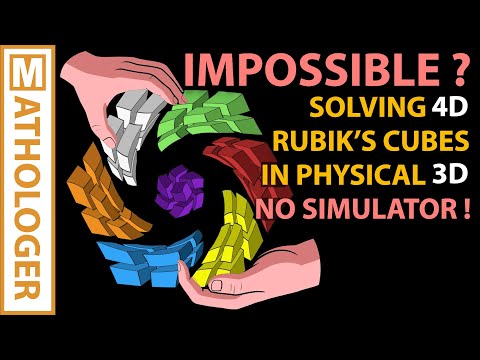
What Is a Physical 4D Rubik's Cube and How Do You Build One?
A 4D Rubik's cube is a four-dimensional puzzle represented in three-dimensional physical form. Unlike simulators, building one tangibly requires understanding how 4D geometry projects into our 3D world. You construct it using a 3x3x3 core cube with rotating slice mechanics that simulate the fourth dimension's rotations. The key difference: each face has colored stickers on multiple layers, and rotations affect pieces in non-intuitive ways. This guide shows you how to assemble and solve it without relying on digital tools.
Essential Materials and Construction Steps
Start with a quality 3x3x3 Rubik's cube as your foundation. You'll need additional cube pieces or a specialized 4D cube kit that extends the puzzle structure. High-quality cubes reduce friction during solving. Consider purchasing cubes with smooth mechanisms and reliable corner-cutting abilities, as these features make learning the solving technique much easier.
The construction process involves:
First, understand the internal mechanism. A 4D cube uses layered rotation systems. The center layers rotate independently from outer layers, creating additional complexity. Study how each internal piece connects to understand why certain rotations affect distant pieces.
Second, assemble the physical structure. Place the core 3x3x3 cube in the center. Attach extension pieces that represent the fourth dimension's projection. These pieces should rotate smoothly around the main cube. Test each rotation to ensure no pieces stick or jam.
Third, apply color stickers systematically. Unlike a standard cube, a 4D cube requires multiple colored stickers on overlapping faces. Label each sticker carefully to track how rotations affect the overall puzzle state.
Fundamental Solving Techniques for 4D Puzzles
Solving a 4D Rubik's cube requires a different mental approach than solving a 3D cube. Your brain must track pieces moving through invisible four-dimensional rotations that manifest in three-dimensional space.
Start with layer-by-layer solving. Complete the bottom layer first, then work upward. This approach mirrors standard cube solving but requires patience to understand how non-obvious piece movements work in four dimensions.
Learn rotation notation. Each face and internal layer has specific notation that describes how it rotates. Memorize these notations before attempting complex move sequences. Without clear notation, you'll lose track of your progress quickly.
Practice single algorithms repeatedly. An algorithm is a sequence of moves that accomplishes one specific task, like rotating a corner piece. Master simple algorithms before combining them into longer sequences. This builds the muscle memory and spatial reasoning you need.
Work on one piece type at a time. Solve center pieces first, then edges, then corners. This systematic approach prevents scrambling already-solved pieces and helps you see progress clearly.
Common Challenges and Solutions
Most people struggle with spatial visualization when learning 4D puzzles. Your brain naturally works in three dimensions. Retraining yourself to think in four takes time and repetition. Write down move sequences. Video record your attempts. This external reference helps you understand what went wrong when a solve fails.
Cube binding is another frequent issue. If pieces jam during rotation, slow your movements down. Poor lubrication or low-quality cube internals cause binding. Investing in a premium cube reduces frustration significantly.
If you're spending extensive time on this hobby and want to improve faster, consider connecting with local puzzle experts. You can find local service pros near you who specialize in cube maintenance or even tutoring. Some enthusiasts offer in-person coaching that accelerates your learning curve dramatically.
Building Expertise and Staying Motivated
Join online puzzle communities. Share your progress. Watch videos of experienced solvers. Observe their hand movements and technique refinement. The 4D cube community is smaller than standard cube communities, but it's highly supportive.
Track your solve times. Time yourself each attempt. Gradual improvement, even seconds at a time, provides motivation to continue. Most people solve a 4D cube for the first time after 5 to 15 hours of focused practice.
Conclusion
Building and solving a physical 4D Rubik's cube without simulators is challenging but achievable. Start with quality materials, understand the four-dimensional geometry, practice systematically, and be patient with yourself. Your spatial reasoning will improve dramatically. The sense of accomplishment when you solve one for the first time makes every frustrating moment worthwhile.