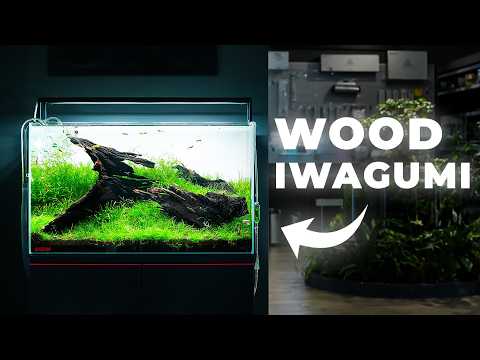
Can a Wood Iwagumi Aquascape Exist?
Yes, a wood iwagumi aquascape can exist, but it breaks traditional design rules. Iwagumi relies on stone as its focal point and foundation. Adding wood challenges this core principle. However, experienced aquascapers blend both elements successfully by treating wood as a secondary accent rather than the primary structure. The key is restraint and intentional placement.
Understanding Traditional Iwagumi Design
Iwagumi is a Japanese aquascaping style centered on rock placement. The design uses three to five stones of varying sizes to create harmony and balance. Stone becomes the skeleton of the entire layout. Plants and substrate support the rock composition, not replace it.
This style demands careful planning. The largest stone anchors the foreground. Smaller stones balance the composition. Every element serves the stone arrangement. Adding wood complicates this visual hierarchy. You risk creating confusion rather than cohesion.
Traditional iwagumi avoids distraction. Clean lines and minimal elements define the aesthetic. Driftwood naturally draws attention. It competes with stone instead of complementing it. This is why purists argue that true iwagumi cannot include wood.
The Case for Wood in Iwagumi Layouts
Modern aquascaping evolves beyond strict rules. Some aquascapers successfully incorporate small wood pieces into iwagumi tanks. The approach requires specific conditions to work.
First, use minimal wood. A single, small piece positioned behind or beside the main stone can work. It must be subordinate to the rock composition. The stone remains the focal point. Wood becomes a supporting actor.
Second, choose wood carefully. Fine-textured driftwood works better than thick branches. Avoid dramatic shapes that demand attention. Select pieces that complement stone colors and create visual flow.
Third, consider tank size. Larger tanks (40 gallons and up) have more space to balance competing elements. Smaller tanks cannot accommodate both without conflict.
To maintain these layouts properly, invest in quality equipment. A canister filter for your aquarium keeps water clean and plants healthy. A LED planted tank light ensures proper photosynthesis and highlights your hardscape elements.
Practical Steps for Wood-Stone Integration
If you want to attempt a hybrid design, follow these guidelines.
Start with your main stone first. Position it exactly as you would in a traditional iwagumi layout. This anchors the entire composition. Only after the stone is perfect should you consider wood placement.
Position wood off to the side or in the background. Never place it at the same visual weight as your primary stone. Use the rule of thirds to guide placement. This creates asymmetrical balance without conflict.
Plan your planting around both elements. Fast-growing stem plants can soften wood edges. Smaller foreground plants highlight the stone. This layering keeps attention on the hardscape composition.
Monitor water parameters closely. Wood releases tannins and lowers pH. Stone doesn't affect water chemistry. Use an API Freshwater Master Test Kit to track changes. Maintain stability with regular water changes and an aquarium heater (100W) to keep temperature consistent.
The Design Philosophy Decision
The real question isn't whether wood iwagumi can exist. It's whether it should. Pure iwagumi design exists for a reason. The focus on stone creates meditative, balanced spaces. Adding wood dilutes that philosophy.
If you love both wood and stone aesthetics, consider a different style entirely. Dutch aquascaping welcomes multiple hardscape types. Nature aquascaping blends everything organically. These styles might better suit your vision than forcing wood into iwagumi.
That said, rule-breaking leads to innovation. If you're confident in your design eye and willing to experiment, try it. Document your process. Share your results. The aquascaping community learns from creative attempts.
Final Thoughts
A wood iwagumi aquascape can work in theory and practice. Success depends on restraint, careful planning, and design understanding. Keep wood minimal and subordinate to stone. Treat it as an accent, not a focal point. This approach respects iwagumi tradition while allowing creative expression.
The aesthetic might not be pure iwagumi. But it can be beautiful. The choice is yours.