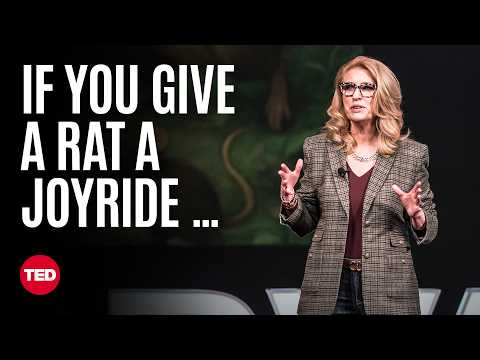
What Happens When Rats Learn to Drive?
Neuroscientist Kelly Lambert taught rats to operate tiny vehicles in her laboratory. The results surprised everyone. Rats not only learned the task but showed measurable improvements in mental resilience and stress response. The key finding: when animals worked for rewards rather than receiving them freely, they developed greater emotional stability and reduced anxiety. This simple experiment reveals fundamental truths about how effort shapes our brains and builds mental strength.
The Neuroscience Behind Effort-Based Rewards
Lambert's research centers on one critical concept: effort-based rewards change brain chemistry. When rats drove their vehicles to earn treats, their brains released different neurochemical profiles than when they simply received food. The effort activated neural pathways associated with motivation, accomplishment, and stress resilience.
This matters for your life. Your brain doesn't distinguish much between a rat's driving task and your daily work. When you complete difficult projects, earn money through effort, or accomplish meaningful goals, your brain releases dopamine and strengthens neural circuits tied to confidence and resilience. If you want to understand how to build these circuits systematically, consider reading $100M Offers by Alex Hormozi, which explores how effort and value creation compound over time.
The inverse is also true. When rewards come without effort, the brain doesn't build the same resilience pathways. This explains why passive consumption leaves us feeling empty and why struggle often precedes growth.
Animal Cognition and What It Teaches Us About Ourselves
Lambert's rats weren't just learning a mechanical skill. They demonstrated problem-solving, spatial reasoning, and goal-directed behavior. Some rats became more skilled drivers than others. They showed preferences, frustration tolerance, and even what looked like satisfaction after successful runs.
Animal cognition research reveals that intelligence isn't uniquely human. It's distributed across species in different forms. Rats have excellent spatial memory, social awareness, and the ability to learn complex tasks. By studying how they learn and adapt, we understand our own cognitive strengths and limitations.
This research also challenges how we design our own environments and reward systems. If you work from home or manage a team, your physical setup matters. A standing desk converter encourages movement and engagement, mimicking the active problem-solving that builds cognitive resilience. Small environmental changes trigger behavioral shifts.
Mental Health, Resilience, and the Power of Meaningful Effort
Mental health challenges often stem from disconnection between effort and reward. Depression, anxiety, and learned helplessness develop when people feel their actions don't matter. Lambert's research suggests the inverse: when effort reliably produces meaningful results, mental health improves.
The practical implication is clear. Build goals that require genuine effort. Use a business planner and goal tracker to create visible progress toward objectives that matter to you. Seeing effort translate into concrete results activates the same resilience-building mechanisms Lambert observed in her rats.
If you're building a personal brand or business, this principle extends further. Share your journey publicly. Create content about what you're learning. This turns effort into connection and creates compound value. You might even join the It's Buzzing Ambassador Program to earn while sharing meaningful content with your community.
For those documenting their progress, a USB podcast microphone kit opens doors to audio content, expanding how you share effort-based achievements with wider audiences.
The Practical Takeaway
Kelly Lambert's rats taught her something fundamental: the struggle matters. Effort isn't suffering to endure. It's the mechanism through which brains build resilience, confidence, and mental health. The work of driving the vehicle, though pointless by external standards, created measurable neurochemical and behavioral changes.
Your brain works the same way. Choose work that challenges you. Pursue goals that require genuine effort. Build systems that make progress visible. When effort produces results, your nervous system learns that action matters. That learning becomes the foundation of mental strength.
The rats didn't just learn to drive. They learned resilience. So can you.