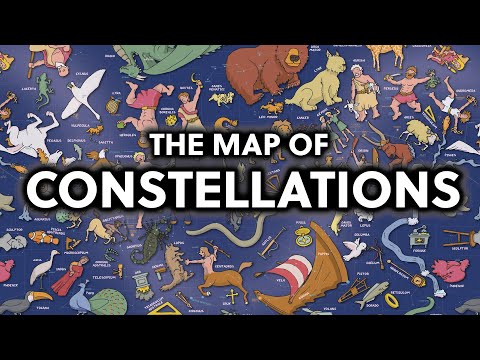
What Is the Complete Map of All 88 Constellations?
There are exactly 88 official constellations recognized by the International Astronomical Union. These patterns of stars cover the entire night sky, divided between the northern and southern hemispheres. A complete constellation map shows all of them plotted on a celestial sphere. Each constellation has specific boundaries and coordinates. You can use these maps to locate stars, navigate using the heavens, and understand how ancient and modern cultures view the sky. Having a full reference is essential for any stargazer.
Understanding Constellation Mapping Basics
Constellation mapping is the practice of identifying and plotting star patterns across the night sky. The 88 constellations aren't randomly placed. They follow established coordinates using right ascension and declination, similar to latitude and longitude on Earth.
The northern hemisphere contains 47 constellations. The southern hemisphere has 40. Three constellations cross both hemispheres. Each constellation has an official three-letter abbreviation used in astronomy.
Modern constellation maps use different formats. Planisphere charts are circular and rotate to show different seasons. Star atlases display sections of the sky across multiple pages. Digital planetarium software lets you explore the sky interactively from your location. Printed maps work without batteries and are reliable in the field.
Learning constellation mapping takes time but builds core astronomy skills. Start by identifying bright constellations visible from your location during your current season. Move to fainter ones as your eyes adjust and skills improve.
Practical Stargazing and Celestial Navigation
The best stargazing happens away from city lights. Light pollution drowns out dim stars. Rural areas, state parks, and designated dark sky sites offer the clearest views. Check weather forecasts for clear nights. New moon phases provide the darkest skies.
Binoculars help you see fainter stars and star clusters. A small telescope reveals even more detail. Start with naked-eye observation first to learn major patterns. Quality astronomy equipment from local retailers can enhance your experience significantly.
Celestial navigation uses constellations to find directions and determine latitude. The North Star (Polaris) sits almost directly above Earth's North Pole. Finding Polaris helps you orient any map. In the southern hemisphere, the Southern Cross points toward the South Celestial Pole.
Learn these navigation stars first: Polaris in the north, Sirius (brightest star in the sky), Betelgeuse, Rigel, and Vega. These anchor points help you find everything else. Use constellation maps as reference guides during your sessions.
Using Constellation Maps for Astronomy Education
Teaching astronomy to children becomes easier with constellation maps. Kids love finding recognizable patterns in the sky. Start with constellations that have clear shapes: Orion the hunter, the Big Dipper (part of Ursa Major), and Cassiopeia.
Interactive learning works best. Take kids outside with a flashlight and map. Point to stars in real time. Let them trace patterns with their fingers. Download planetarium apps that show constellations labeled on your phone screen. These tools make connections between maps and actual sky positions instant and obvious.
Many communities offer astronomy clubs and stargazing events. Find local astronomy clubs and educators near you to join group observing sessions. These gatherings provide mentorship, equipment sharing, and motivation.
Museums and science centers often host planetarium shows about constellations. These presentations teach mythology, navigation, and scientific facts in engaging formats. Consider visiting nearby facilities to deepen your knowledge.
Building Your Constellation Knowledge
Learning all 88 constellations takes months or years. Most experienced stargazers focus on seasonal constellations visible during each time of year. Spring constellations differ from summer, fall, and winter ones.
Keep a stargazing journal. Record which constellations you've identified, the date, time, and location. Note weather conditions and equipment used. This record builds your experience and helps you track progress.
Invest in quality reference materials. Star maps, constellation guides, and astronomy handbooks provide accurate information whenever you need it. Digital tools are convenient, but printed materials never need charging.
Conclusion
The complete map of all 88 constellations represents humanity's attempt to organize and understand the night sky. Learning these patterns improves your stargazing skills, teaches navigation, and connects you to centuries of astronomical tradition. Start with visible constellations in your season, use quality maps as references, and practice regularly. The night sky rewards patient observers with endless discovery.