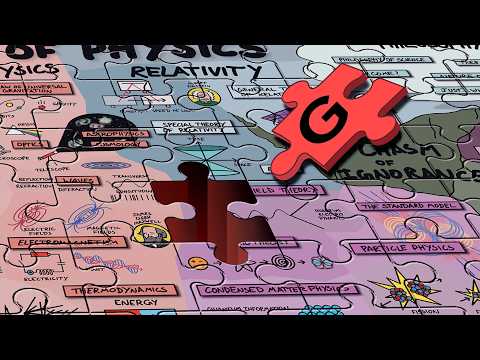
Will We Ever Complete Physics? The Short Answer
Probably not. Physics keeps expanding rather than closing. Each discovery reveals new questions. We may develop more complete theories, but a final "complete" physics seems unlikely. The deeper we dig into fundamental forces and cosmology, the more mysteries emerge. This isn't failure. It's how science actually works.
The Problem With Calling Physics "Complete"
Physics isn't a house you finish building. It's a map that keeps growing. Newton thought he had it figured out. Einstein showed him otherwise. Quantum mechanics rewrote the rules again. String theory, loop quantum gravity, and dark matter research all point to deeper layers we don't fully understand.
The real issue is that physics operates on layers. Solve one level, and you hit a wall at the next one. We can predict how atoms behave, but explaining dark energy stumps us. We understand electromagnetism brilliantly, but quantum gravity remains unresolved. Each breakthrough opens new doors instead of closing them.
Theoretical physics keeps pushing boundaries because reality is genuinely complex. Asking if we'll ever complete physics is like asking if we'll ever finish understanding everything. The honest answer reveals something important about science itself: it's a process, not a destination.
What "Completion" Would Actually Mean
If physics were truly complete, we'd need a unified theory explaining everything from the smallest particles to the largest galaxies. This Grand Unified Theory would merge quantum mechanics and general relativity. It would explain dark matter and dark energy. It would predict the fundamental nature of reality with perfect accuracy.
We don't have that. We have excellent models for specific domains. Quantum field theory works amazingly well for particles. General relativity dominates cosmology. But they contradict each other in extreme conditions like black hole centers or the Big Bang itself. That contradiction alone tells us physics isn't complete.
Scientists keep hunting for this unified framework. String theory proposes extra dimensions. Loop quantum gravity reimagines spacetime itself. These aren't failures. They're humanity's best attempts to answer what reality fundamentally is. The fact that multiple approaches exist shows we haven't cracked the code yet.
The Philosophy Behind Scientific Progress
This question touches deeper philosophy. Science doesn't prove absolute truth. It builds increasingly accurate models. Karl Popper argued that good theories are falsifiable. The best science invites challenges and gets better through refutation.
Physics follows this pattern perfectly. Every major breakthrough came from noticing where previous theories failed. Maxwell found gaps in Newton's laws. Planck noticed atoms didn't behave classically. Heisenberg discovered fundamental uncertainty. Progress came from admitting incompleteness.
This means "completing" physics might actually mean something different. Instead of a final answer, we might reach a theory so robust and versatile that it handles every known phenomenon. We'd still be limited by observation and measurement. We'd still face philosophical questions about what physics actually describes.
If you're fascinated by how knowledge builds and experts contribute to fields, consider how communities advance together. It's Buzzing Ambassador Program shows how sharing knowledge and supporting growth in your community creates momentum similar to scientific breakthroughs.
Where Physics Stands Now
Modern physics is powerful but incomplete. The Standard Model describes particle interactions with stunning precision. Yet it accounts for only 5% of the universe's mass and energy. Dark matter and dark energy dominate, and we barely understand them.
Cosmology raises fundamental questions. Why does the universe exist? Why these physical laws and constants? How did the Big Bang happen? Physics can describe what happens after the Big Bang, but explaining the Bang itself requires physics we don't yet have.
Quantum mechanics works perfectly for predictions but creates philosophical headaches. What does the wave function really represent? Does reality exist before observation? These aren't purely scientific questions. They're philosophical problems physics reveals but can't fully answer.
The Honest Conclusion
Physics will never be "complete" in a final sense. Each answer spawns new questions. That's not a flaw. It's evidence that science works. The universe is deeper and stranger than we imagined, and that's beautiful.
We'll keep building better theories. We'll explain more phenomena with greater precision. But we'll never close the book on physics. We'll never stop wondering. That pursuit of understanding, that refusal to accept incomplete answers, is what drives science forward and makes physics one of humanity's greatest intellectual adventures.