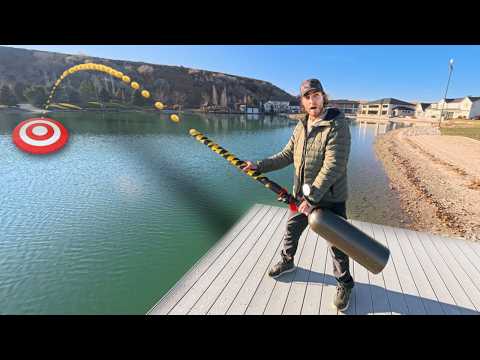
What Makes a Potato Cannon Accurate?
A truly accurate potato cannon relies on three core factors: barrel alignment, consistent air pressure, and proper projectile fit. The barrel must be perfectly straight and centered. Air pressure needs to stay constant between shots. Your potato rounds should fit snugly without jamming. Get these three elements right, and you'll hit your targets consistently. Most homemade cannons fail because builders ignore one of these basics.
Start with Barrel Construction
Your barrel is everything. Use Schedule 40 PVC pipe in 2 to 3-inch diameter sizes. Larger barrels give better accuracy than small ones. The length matters too. A 24 to 36-inch barrel provides the sweet spot between velocity and control. Avoid thin-walled pipes. They flex during firing, ruining accuracy.
Before assembly, ensure your barrel sections are perfectly aligned. Use a laser level or string to check straightness. Even slight bends destroy accuracy at distance. If you're using multiple pipe sections, connect them with couplers and apply PVC cement generously. Dry-fitting first helps you catch alignment issues before permanent assembly.
The interior surface must be smooth. Sand out any rough spots inside the barrel that could catch on potatoes. Use 220-grit sandpaper and go slowly. A smooth barrel means faster, more consistent projectile movement.
Pressure System and Ignition Improvements
Consistent air pressure is non-negotiable for accuracy. Most builders use a separate combustion chamber for the ignition source. This keeps your pressure chamber clean and reliable. A 4 to 6-inch diameter PVC pipe works well for the combustion chamber, typically 12 inches long.
Install a pressure gauge. A simple analog gauge rated for 150 PSI costs little and tells you exactly what pressure you're firing at. This lets you repeat shots at identical pressures, which dramatically improves grouping.
For ignition, use an electronic spark system rather than a match. A small piezo igniter or automotive spark plug creates reliable firing every time. Match-based systems fail inconsistently, making accuracy testing impossible.
Your chamber valve is critical. A ball valve lets you drain pressure safely between shots. An adjustable regulator lets you control maximum pressure precisely. These components seem small but they're the difference between a toy and a precision launcher.
Projectile Selection and Barrel Fit
Potato shape and size directly impact accuracy. Round potatoes outperform oblong ones. Consistency matters more than size. You want potatoes that are roughly the same weight and diameter. Weigh them before loading. A variance of more than 5 ounces between rounds shows in your accuracy.
Your potato should fit the barrel with minimal play. Too loose and it wobbles. Too tight and it jams or creates dangerous pressure spikes. Test fit before assembly. If potatoes jam, sand the barrel interior slightly or choose smaller potatoes.
Some builders use foam projectiles instead of potatoes for consistent results. Craft foam rounds hold their shape perfectly and fire predictably. They're lighter, so you'll need less pressure, but they group tighter than organic projectiles.
Consider using a ramrod to load potatoes straight down the barrel center. This small addition prevents jamming and ensures consistent seating depth.
Testing and Refinement
Once built, test at fixed distance. Start at 30 feet. Fire three rounds at identical pressure settings. Measure your group size. Tighten bolts and check alignment after each shot. Small vibrations compound over multiple fires.
Keep a firing log. Record pressure, projectile weight, distance, and results. This data reveals what pressure gives your best grouping. Most accurate cannons peak at 80 to 100 PSI, not maximum pressure.
If you're planning to build professionally or need specialized parts, find local service pros near you who can help source materials or handle custom machining of critical components.
Final Thoughts
Building an accurate potato cannon takes patience and attention to detail. The barrel, pressure system, and projectile selection work together. Master all three and you'll build something that actually hits what you aim at. Start simple, test methodically, and refine based on data, not guesses. That's how you build the most accurate potato cannon possible.