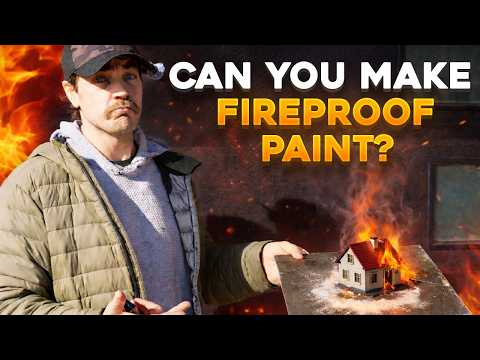
Can You Make Fireproof Paint from Household Materials?
Yes, you can create a basic fireproof paint using common household items like boric acid, borax, flour, and water. This DIY mixture won't match commercial-grade fire retardants, but it provides a useful secondary layer of protection. The boric acid and borax work as flame suppressants by releasing water vapor when heated, cooling the surface and slowing fire spread. Results depend on material quality, application thickness, and proper mixing ratios.
Understanding Fireproof Paint Chemistry
Fireproof paint works differently than regular paint. Commercial versions contain intumescent compounds that expand when exposed to heat, creating a protective char layer. Household recipes mimic this using simpler chemistry.
Borax and boric acid are naturally flame-retardant minerals. When heated, they release water molecules that cool the surrounding area. Flour acts as a binder and adds bulk to the mixture. This combination slows combustion but won't stop fire completely.
The effectiveness depends on thickness. A thin coat provides minimal protection. Multiple layers increase fire resistance significantly. Application surface matters too. Porous materials like wood absorb the mixture better than smooth surfaces.
If you're serious about home fire safety, consider consulting with local service professionals who can assess your specific needs and recommend appropriate solutions for your property type.
Step-by-Step DIY Fireproof Paint Recipe
Making basic fireproof paint at home is straightforward. You need five ingredients: one cup of borax powder, one cup of boric acid, two cups of flour, three cups of water, and a mixing container.
First, combine the borax and boric acid in your container. Mix thoroughly to break up clumps. Add flour gradually while stirring to prevent lumps from forming. Slowly add water while continuing to mix. The consistency should resemble regular paint. Strain through a fine cloth if lumps remain.
Apply with a standard paint brush or roller. Use thin, even coats. Allow each layer to dry completely before adding another. Three to four coats provide reasonable protection for most applications. The mixture dries to a chalky finish that you can paint over with regular paint if desired.
Store leftover mixture in an airtight container. It keeps for several weeks if sealed properly. Shake well before each use since ingredients may separate.
Real-World Testing and Limitations
Household fireproof paint slows fire spread but doesn't prevent it entirely. Testing shows it delays flame advancement by several minutes compared to untreated surfaces. This extra time matters for evacuation purposes.
The mixture works best on wood and fabric. It's less effective on metal or plastic surfaces. Moisture reduces effectiveness, so use it in dry interior spaces only. Outdoor application isn't recommended since rain will wash away the protective coating.
Results vary based on material quality and mixing accuracy. Store-bought borax and boric acid vary in purity. Incorrect ratios reduce effectiveness. Water content affects drying time and final hardness.
Commercial fire-retardant paints remain superior for critical applications like children's bedrooms or near electrical equipment. They're tested to strict fire codes and backed by manufacturer guarantees. Household recipes are useful supplements, not replacements.
When to Use DIY Fireproof Paint
This homemade solution works well for basement storage areas, garage walls, or attic spaces. It's practical for temporary protection or budget-conscious homeowners. Adding it to existing paint can improve fire resistance without complete repainting.
Don't rely on it alone for high-risk areas. Combine DIY fireproof paint with proper smoke detectors, fire extinguishers, and evacuation plans. These layers of protection work together effectively.
For businesses or properties requiring code compliance, commercial products are necessary. Professional contractors understand local fire codes and can recommend appropriate solutions for your situation.
Looking to support local businesses in your community? Explore the Buy Local Directory to find quality paint suppliers and home improvement contractors nearby who can help with your fire safety projects.
Conclusion
Making fireproof paint from household materials is possible and can enhance home fire safety. The DIY approach offers budget flexibility and educational value. However, understand its limitations. Use it as part of a comprehensive safety strategy, not as your only fire protection measure. For maximum protection, combine homemade solutions with commercial products where appropriate and maintain regular fire safety practices throughout your home.